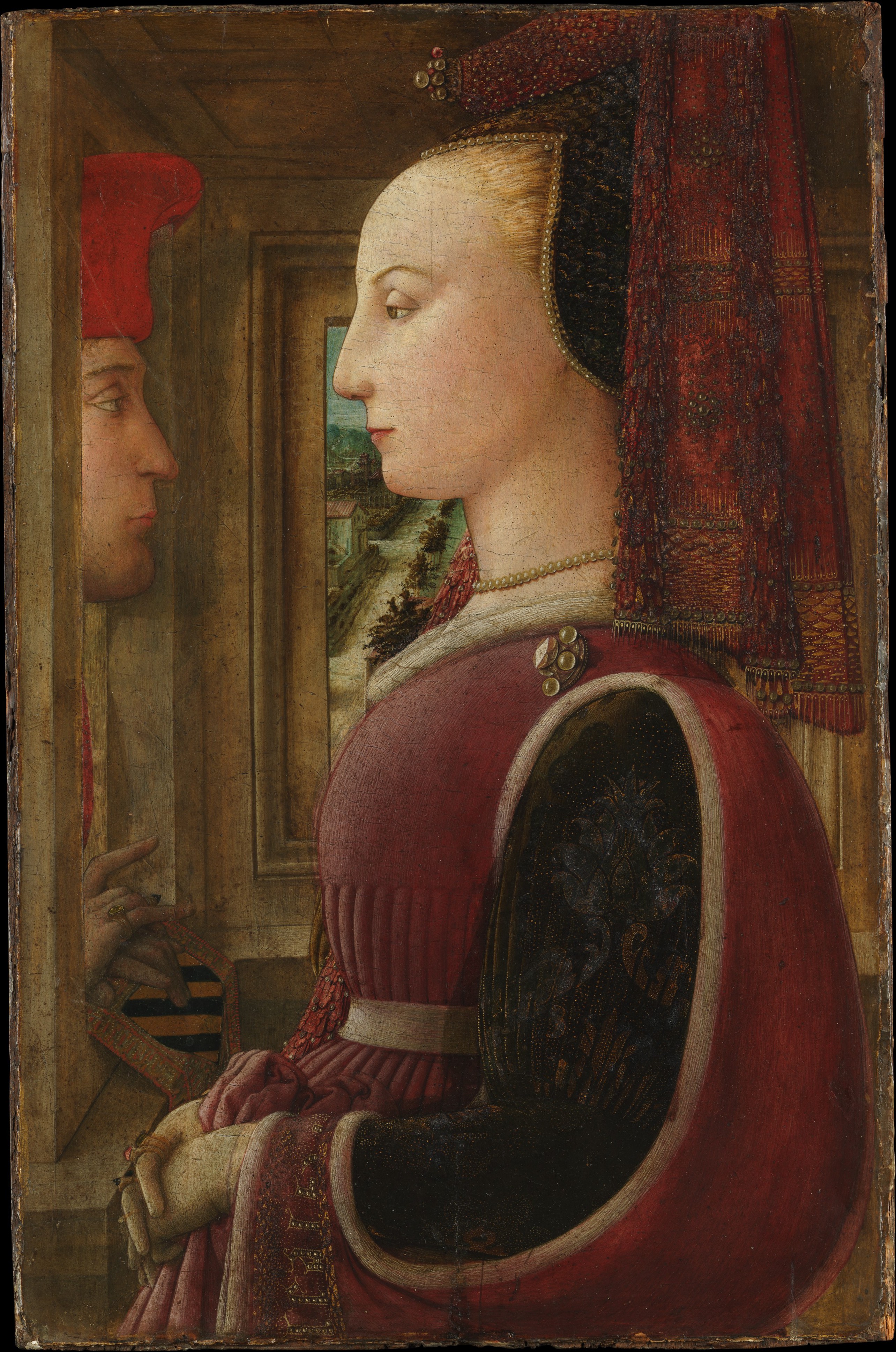
Fra Filippo Lippi's double portrait, painted around 1440, is generally regarded as an early instance of the profile-and-window format later developed across Florentine portraiture; its unusual staging — a woman in profile addressed by a man leaning through an architectural opening — has invited long scholarly discussion about the sitters' identity and the occasion the picture commemorates. Executed in tempera on wood, the panel shows Lippi's characteristic clarity of line and restrained palette. It came to the collection through Henry G. Marquand's gift in 1889, one of the earliest Renaissance panels to enter the public record. Scion regards paintings with this depth of institutional history, however unresolved certain iconographic questions remain, as the benchmark for what settled provenance looks like in practice.